May 25, 2026
Manage your manufacturing operations in real time. With iQM MES, digitalize production tracking, quality control, operator management, machine integrations, and OEE analytics on a single platform.
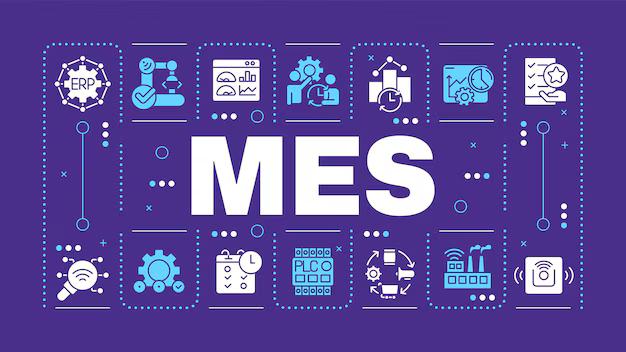
The manufacturing world is no longer just about machines running on the shop floor. Today, businesses operate under increasing pressure in terms of speed, quality, traceability, cost control, and real-time data management. In highly competitive industries, simply producing goods is no longer enough — companies must also manage production efficiently and intelligently.
This is where MES systems come into play.
MES (Manufacturing Execution System) is a production management system that acts as a bridge between ERP systems and the production floor, enabling real-time monitoring, management, and control of manufacturing operations.
While ERP systems plan what should be produced, MES systems manage how production progresses on the shop floor.
With an MES system, manufacturers can:
For industries such as automotive, plastic injection, metal processing, textile, food production, and mass manufacturing, MES is no longer optional — it has become a critical operational requirement.
Even though many companies use ERP systems, production operations are still often managed using Excel spreadsheets, paper forms, or manual tracking methods on the shop floor.
This leads to:
MES systems solve this problem by making production processes real-time and feeding ERP systems with accurate operational data directly from the shop floor.
In short:
ERP = Planning
MES = Real Operational Management
Developed by iQM Technology Software Ltd., iQM MES is a next-generation manufacturing management platform designed for modern industrial enterprises.
Unlike traditional MES systems that focus only on data collection, iQM MES aims to fully digitalize manufacturing operations end-to-end.
The platform combines advanced capabilities such as:
within a single unified platform.
One of the strongest aspects of iQM MES is its real-time data management capability.
Every operation performed on the production floor can be instantly processed within the system, including:
This allows managers to manage manufacturing operations live instead of analyzing reports after production has already occurred.
iQM MES is designed to integrate seamlessly with various ERP systems.
Especially with:
This integration capability allows:
iQM MES provides detailed operator-based production management.
The system enables real-time tracking of:
This provides significant advantages for production optimization and workforce performance analysis.
In modern manufacturing, quality is no longer just a final inspection process — it is a management philosophy integrated into every stage of production.
Within iQM MES, companies can manage:
Manufacturers can trace exactly which machine, operator, and raw materials were involved in producing a specific product.
iQM MES is not limited to manual operator inputs.
Through PLC, sensor, and machine integrations, the platform can automatically collect:
This significantly reduces manual data entry while improving data accuracy and operational visibility.
One of the most critical KPIs in manufacturing is OEE (Overall Equipment Effectiveness).
With iQM MES, manufacturers can calculate in real time:
This enables businesses to clearly identify:
iQM MES is built using modern technologies and scalable system architecture.
The platform supports:
This allows the platform to scale from small manufacturers to large industrial enterprises.
Digital transformation is no longer limited to ERP projects. Companies that cannot access real-time production data are gradually losing their competitive advantage.
MES systems make manufacturing operations visible and manageable by providing:
iQM MES aims to support this transformation with its powerful integration capabilities and next-generation manufacturing architecture tailored for modern industrial businesses.